BREAD before YEAST
CAME IN A PACKET
3 ingredients · 1 starter · 24–48 hours
Sour House
I · The old way
Every risen loaf was once sourdough
For thousands of years there was no yeast to buy. Bakers kept a little of each day’s dough back, fed it with fresh flour and water, and used it to raise the next batch. That living leaven, a mix of wild yeasts and lactic acid bacteria, gave bread its rise, its tang and its keeping qualities.
Commercial baker’s yeast arrived in the nineteenth century, and dried yeast in a packet is a twentieth-century convenience. In 1961 the Chorleywood process went further, using enzymes, improvers and high-speed mixing to make a loaf in a few hours.
The change was made to save time, not to make better bread. Sour House is about going back: flour, water, salt, a starter, and the patience to let fermentation do its work.
Flour
Wheat, rye or spelt, ideally stone-ground
Water
Plain and unchlorinated, if you can
Salt
About 2% of the flour’s weight
Time
The ingredient packet yeast replaced
II · The starter
Seven days to a living leaven
A starter is just flour and water left to ferment until wild yeasts and bacteria settle in. You need a jar, a spoon, scales and a warm-ish kitchen.
Day 1
Mix 50 g wholemeal or rye flour with 50 g lukewarm water in a clean jar. Cover loosely and leave at room temperature.
Days 2–3
Little may happen. Each day, discard half, then stir in 50 g flour and 50 g water.
Days 4–6
Bubbles appear and it smells sour, then fruity. Keep the same daily feed. If it smells like nail-polish remover, it is hungry: feed it twice a day.
Day 7 on
When it doubles within 4–8 hours of a feed, it is ready to bake with. Keep it in the fridge and feed it weekly.
In Maltese the leaven is il-ħmira. Many families kept theirs going for generations.
III · Recipes
A country loaf, the slow way
For one loaf
- Strong white flour: 450 g
- Wholemeal flour: 50 g
- Water: 350 g
- Active starter: 100 g
- Salt: 10 g
- Mix the flours and 330 g of the water. Rest 45 minutes.
- Add the starter, salt and remaining water. Squeeze through until smooth.
- Over two hours, give the dough four sets of stretch-and-folds, 30 minutes apart.
- Leave it to rise until about half as big again, 3–6 hours depending on warmth.
- Shape into a tight round, put it seam-up in a floured basket, cover and refrigerate 8–16 hours.
- Heat a lidded cast-iron pot at 250 °C. Turn the loaf in, score it, bake 20 minutes covered, then 20–25 minutes uncovered at 230 °C.
- Cool for at least an hour before cutting. The crumb is still setting.
IV · Beyond bread
The same old magic, in a jar
Bread was never the only ferment. Before refrigeration, salt, time and friendly microbes kept food through the year.
Sauerkraut
Shredded cabbage and 2% salt, packed under its own brine. One to four weeks.
Kimchi
Salted Chinese cabbage with garlic, ginger, chilli and spring onion. A few days out, then the fridge.
Pickles
Cucumbers or vegetables in a 3.5–5% salt brine. Sour by fermentation, not vinegar.
Kefir
Kefir grains in milk for about 24 hours. Strain, drink, start again.
Kombucha
Sweetened tea, a culture and some of the last batch. Seven to fourteen days.
Sourdough
Where it all starts. The starter above is the same kind of living culture.
Keep vegetables under the brine, use clean jars, and throw away anything that grows fuzzy mould or smells rotten.
V · Malta
Ħobż and ftira
In the old days, all bread in Malta was sourdough. Ħobż tal-Malti, the crusty Maltese loaf with its open, chewy crumb, was raised with ħmira, a piece of leaven kept back from the last bake, and baked in wood-fired ovens, above all in Ħal Qormi, long known as the bakers’ town.
Today it’s a different story. Sadly, almost every bakery on the island now uses yeast from a packet, and you’d be lucky to find a loaf in Malta baked the traditional way.
Ftira, the flattened ring of bread eaten with tomatoes, olives, capers and good oil, was added to UNESCO’s list of the world’s intangible cultural heritage in 2020.
VI · From one starter
Breads we bake
Country loaf
White and wholemeal, long cold proof, dark crust.
Ħobż tal-Malti
The island’s own loaf, crisp outside and open within.
Ftira
Flat, ring-shaped, made for filling.
Rye
Dense, sour and keeps for a week.
VII · Contact
Come and talk bread
Questions about starters, ferments or anything on this page.
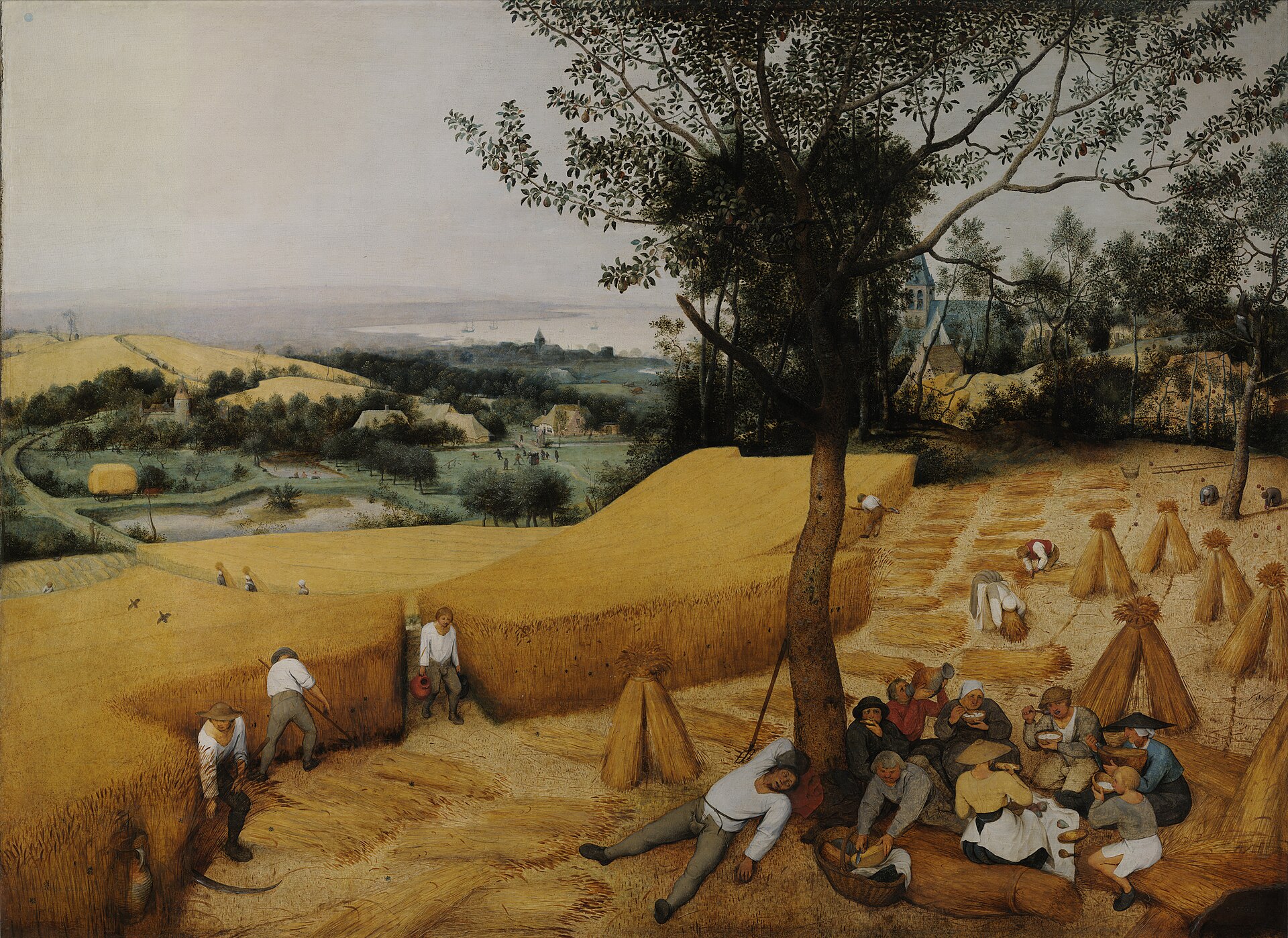
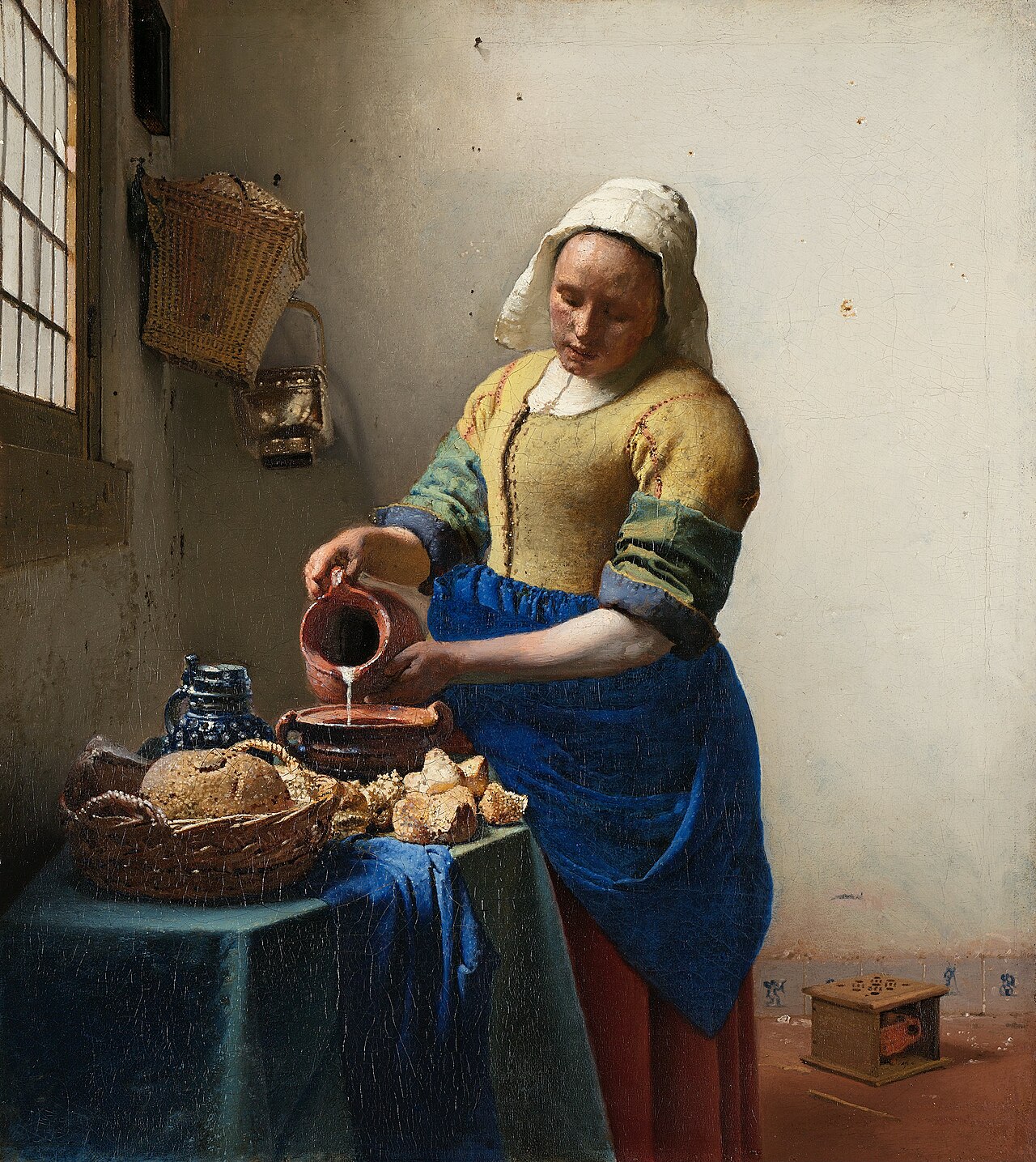
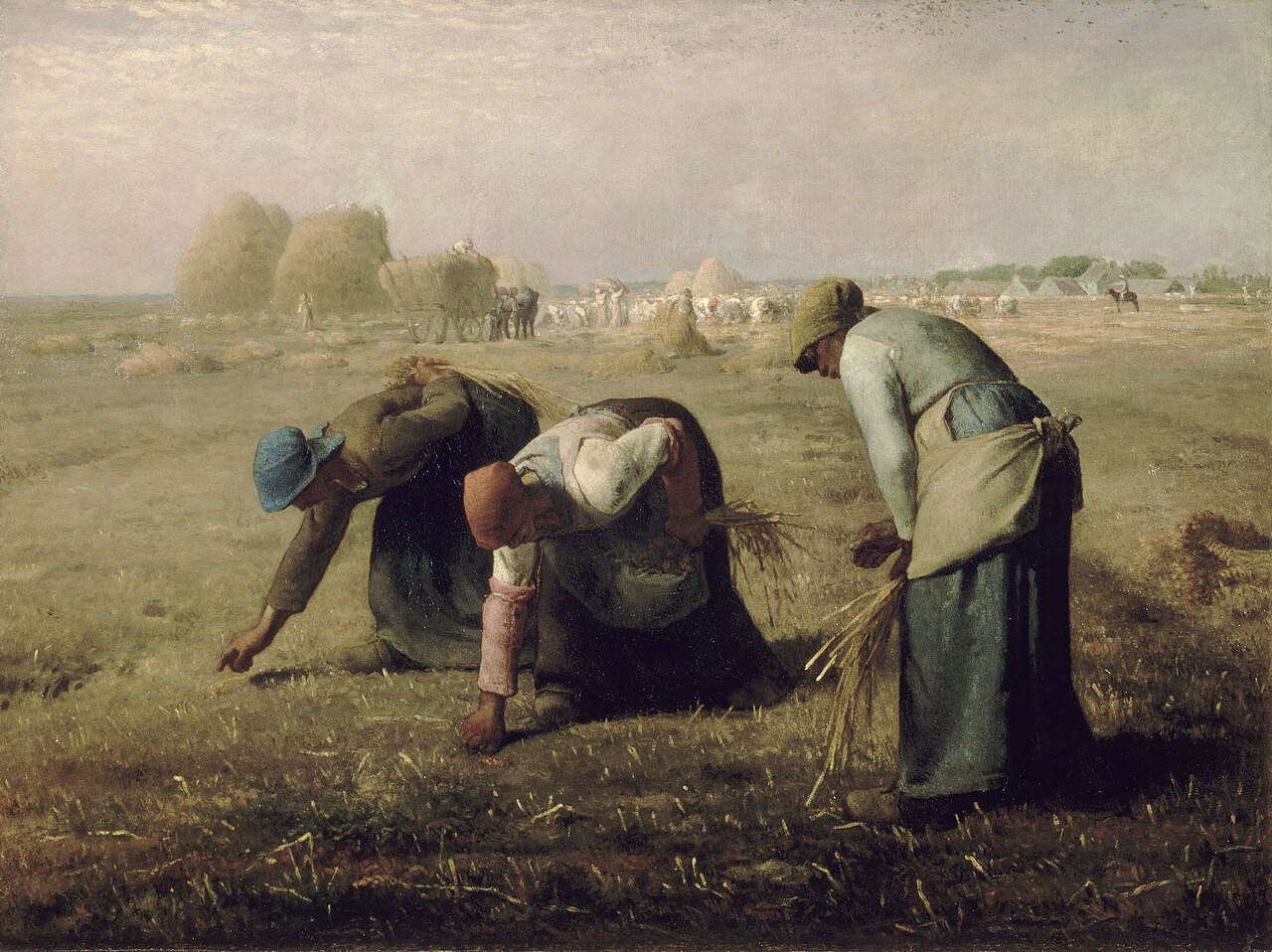
Paintings: Pieter Bruegel the Elder, The Harvesters, 1565 (Metropolitan Museum of Art); Johannes Vermeer, The Milkmaid (Rijksmuseum); Jean-François Millet, The Gleaners (Musée d’Orsay). Public domain, via Wikimedia Commons.

