
Sour pasta
Pasta, given time
Bread is not the only dough a starter can change. Mix a spoonful of living leaven into pasta dough, leave it overnight, and the wild yeasts and bacteria go to work: the flavour deepens, the dough relaxes, and the pasta cooks up with a gentle, nutty tang.
2 + 1
Semolina and water, plus a spoonful of starter
12 hours
Resting on the bench or in the fridge
3 minutes
In boiling salted water, if fresh
No machine
Shaped by hand with a knife and a thumb
I · What it is
A pasta dough left to ferment
Most pasta is never leavened. Dried pasta is durum-wheat semolina and water, pressed and dried; fresh pasta is usually flour and egg, made and cooked the same day. Nothing is given time to ferment.
Sour pasta borrows one habit from the bread bench. A little active sourdough starter goes into the dough, and the dough rests for hours before it is shaped. It does not rise like bread; the point is what fermentation does to flavour and texture.
The result tastes of wheat, faintly sour and a little nutty, with a firm, springy bite. It holds sauce well, and it is a good way to use the starter you would otherwise discard before a feed.
II · A little history
From the drying streets of Naples
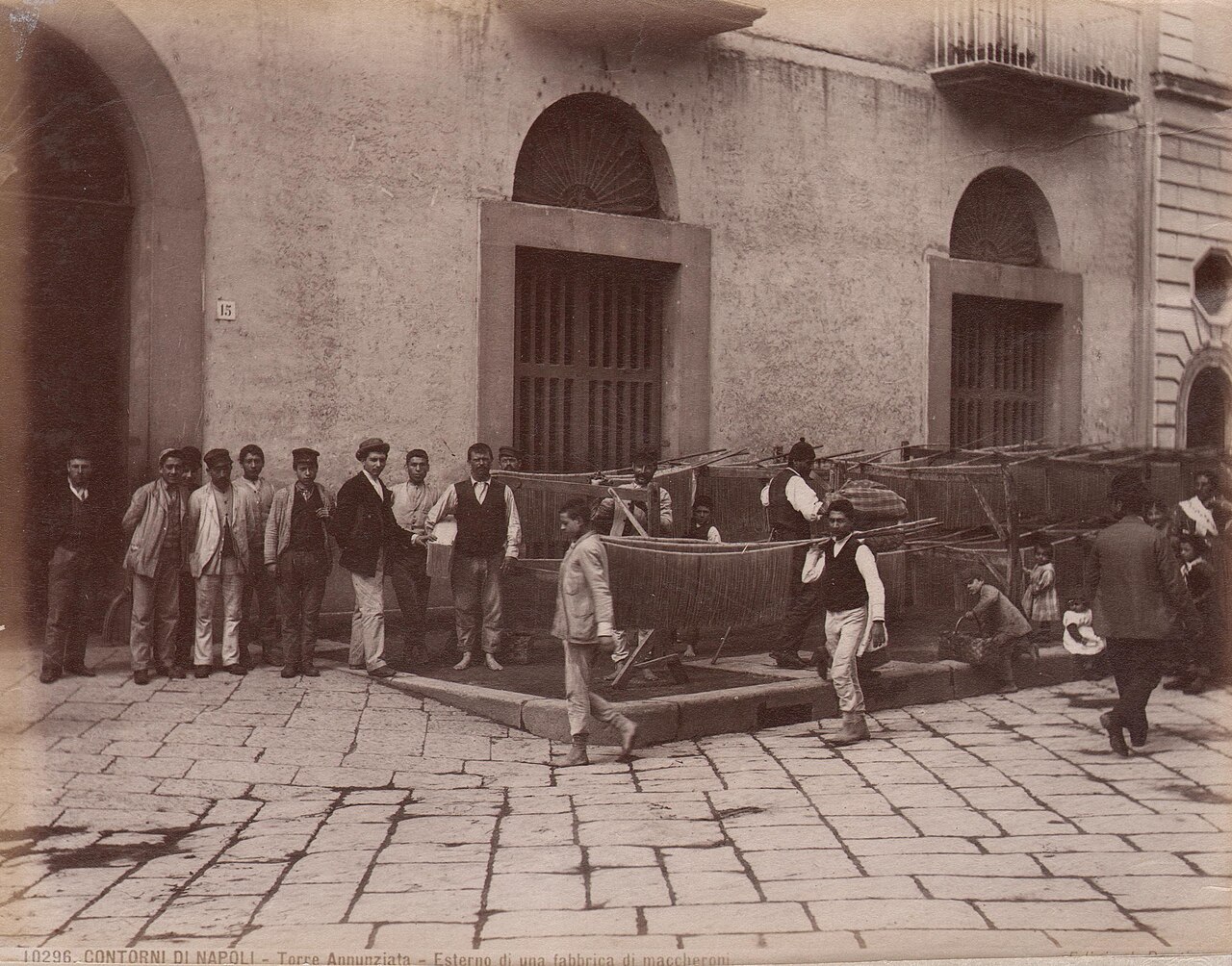
Dried pasta is old. In 1154 the geographer al-Idrisi wrote of Trabia, in Sicily, where so much itriyya, a dried string pasta, was made that it was shipped across the Mediterranean. By the nineteenth century the towns around Naples, Gragnano and Torre Annunziata above all, were drying pasta in the streets, hung on canes in the sea breeze.
Street sellers in Naples cooked macaroni in great pots and sold it by the plate, eaten by hand: the mangiamaccheroni that photographers loved. In Malta, pasta became mqarrun il-forn, timpana and ross il-forn, baked dishes for feast days and Sundays.
Fermenting pasta dough is not part of that old tradition; it is a modern borrowing from bread. But it fits the same idea we care about: simple ingredients, and the patience to let time do the work.
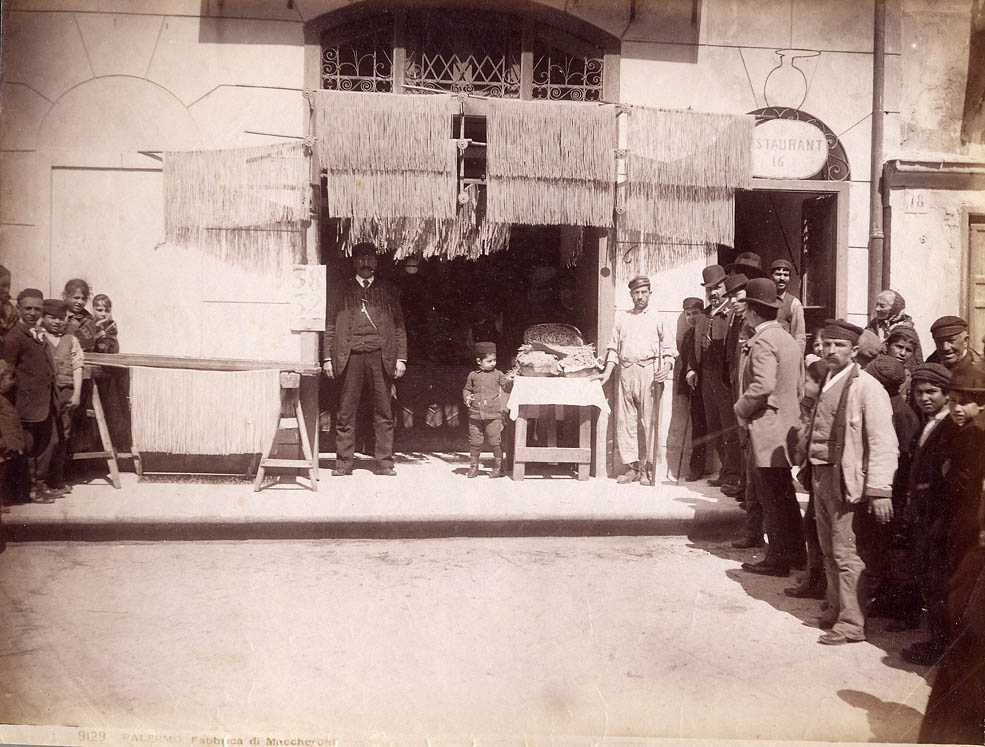
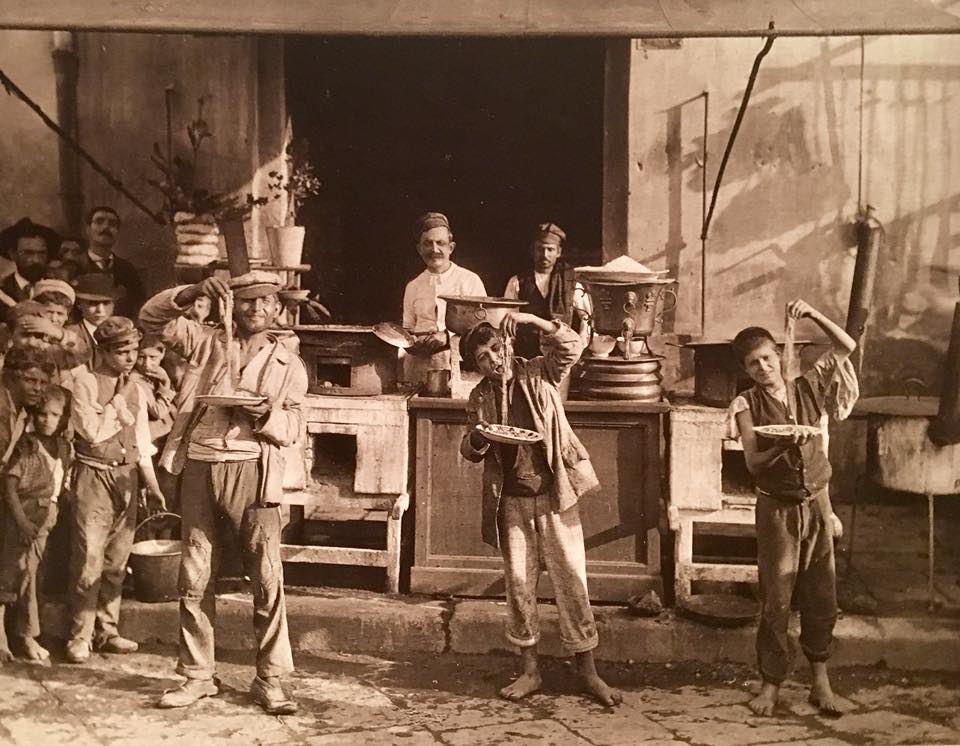
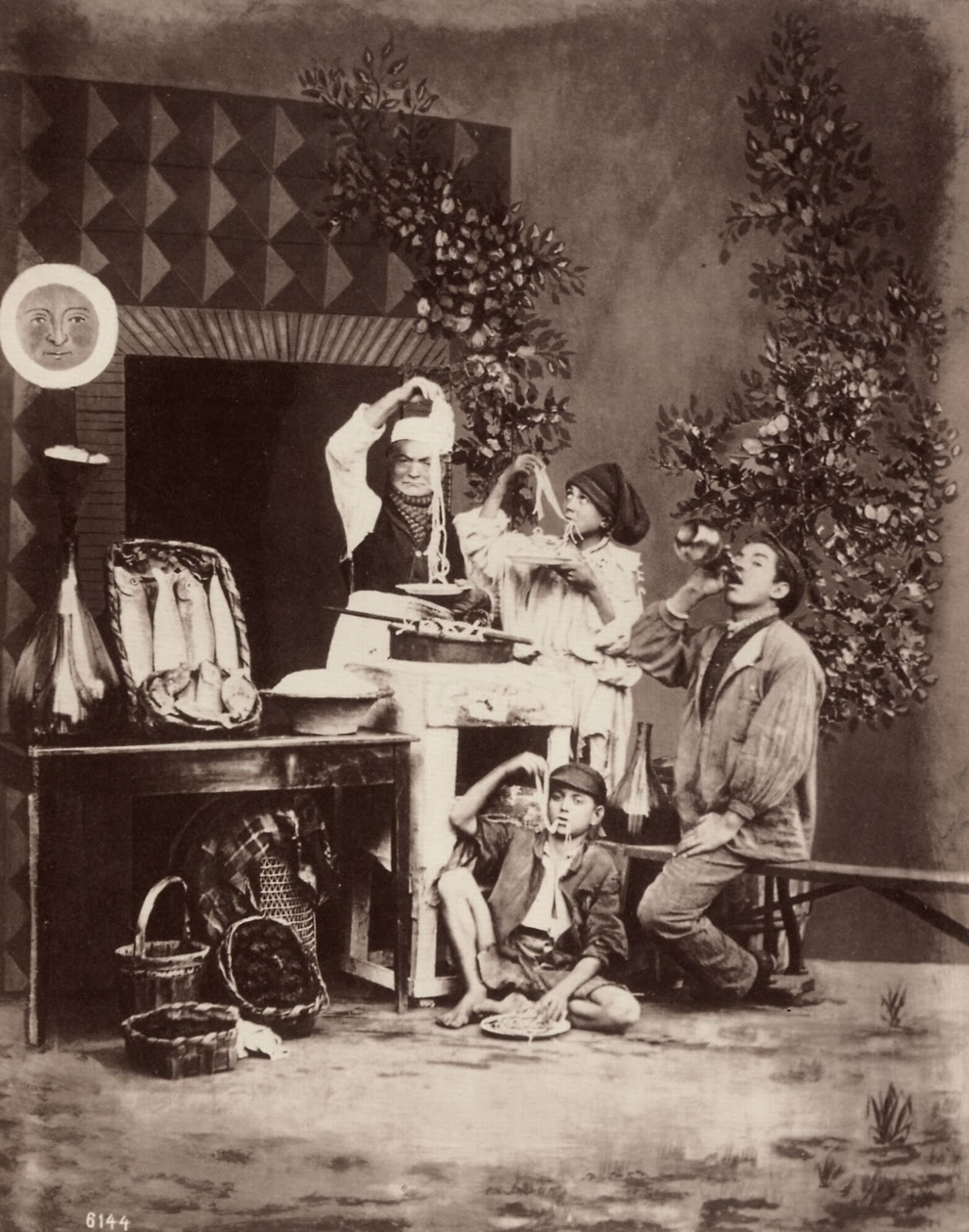
Photographs: Giorgio Sommer (1834–1914) and Carlo Brogi (1850–1925). Public domain, via Wikimedia Commons.
III · The recipe
Sourdough semolina pasta, the slow way
For two to three people
- Semola rimacinata (fine durum semolina): 250 g
- Active sourdough starter, 100% hydration: 100 g
- Water: about 70 g
- Salt: a pinch (optional)
Egg version: 200 g “00” flour, 100 g starter, 1 egg and 1 yolk. Knead the same way.
- Mix the semolina, starter and most of the water into a shaggy dough. Add the rest of the water only if it will not come together.
- Knead for 8–10 minutes until smooth and firm, like modelling clay. Semolina dough should feel stiff, not sticky.
- Wrap it and leave it to ferment: 4–6 hours at room temperature, or 12–24 hours in the fridge for more flavour.
- Bring it back to room temperature, then shape it (see below). Dust the shapes with semolina so they do not stick.
- Cook in plenty of well-salted boiling water: about 3–5 minutes for fresh shapes. Taste one; it should be tender with a little bite.
- To keep, dry the shapes on a cloth or rack for 24–48 hours, turning them now and then, and store them in a jar.
IV · Shapes by hand
No machine, just hands
Semolina dough is made for shaping by hand. Roll a piece into a rope about as thick as your finger, keep the rest covered, and try one of these.
Orecchiette
“Little ears” from Puglia. Cut the rope into small pieces, drag each across the board with a blunt knife, then turn it inside out over your thumb.
Cavatelli
Cut small pieces and press each one along the board with two fingers so it curls into a hollow shell.
Pici
The thick hand-rolled spaghetti of Tuscany. Roll each piece out under your palms into a long, rustic string.
Tagliatelle
For the egg version. Roll the dough thin with a pin, dust it, fold it and cut it into ribbons.
V · What fermentation changes
Flavour, texture and a word of care
Why does it taste different?
The starter’s lactic acid bacteria produce mild acids during the long rest, and enzymes in the flour break some starch down into sugars. Together they give a fuller, slightly tangy, nutty flavour, especially after a night in the fridge.
Does it change the texture?
Yes. The rest relaxes the gluten, so the dough is easier to roll and shape, and the cooked pasta is firm and springy rather than soft.
Is it easier to digest?
Some people find it so. Long fermentation breaks down part of the phytic acid and some of the fermentable carbohydrates in wheat, as it does in sourdough bread. The effect depends on time and temperature, and there is little research on pasta itself, so treat any benefit as a bonus rather than a promise.
Is sour pasta safe for coeliacs?
No. Pasta made with wheat, including durum semolina, still contains gluten after fermentation. It is not suitable for anyone with coeliac disease.
Can I use starter discard?
Yes. Discard works well because the pasta does not need to rise; it only needs the culture and its acids. Use it within a day or two of the last feed.
Start with a starter
Every sour pasta begins with a jar of flour and water. Our guide takes you from day one to a lively starter.

