Our breads
Shaped by hand, raised by a starter
These photos come from our bake days in late 2018. Every loaf here started the same way: flour, water, salt and a spoonful of living leaven, then hours of waiting. Follow a batch from the bench to the bread knife.
Mix
Flour, water, salt and starter
Rest
Hours of slow fermentation
Shape
Rounds and ovals, by hand
Prove
Overnight in cane baskets
Bake
Hot oven, dark crust
I · The dough
Flour, water, salt, time
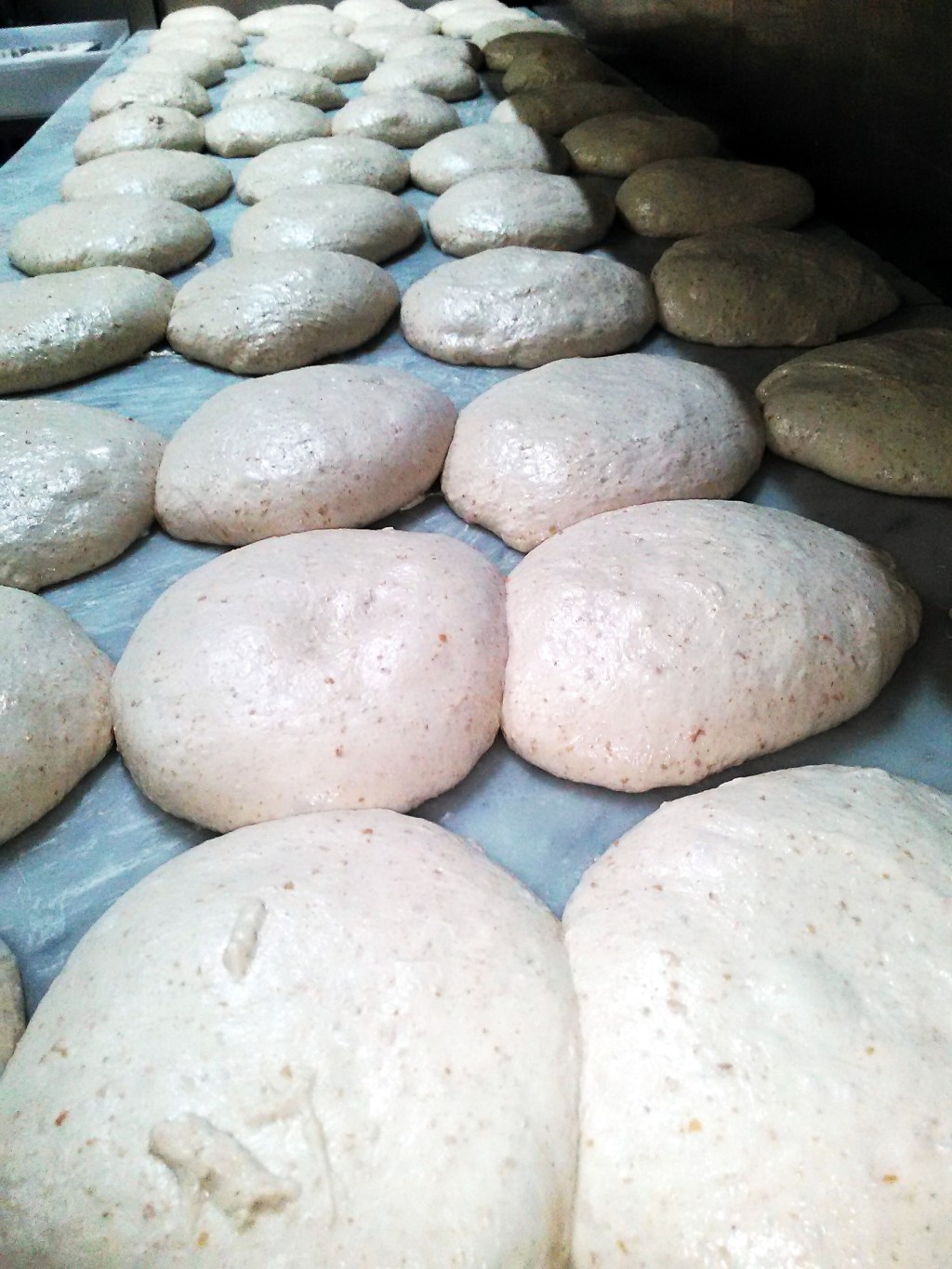
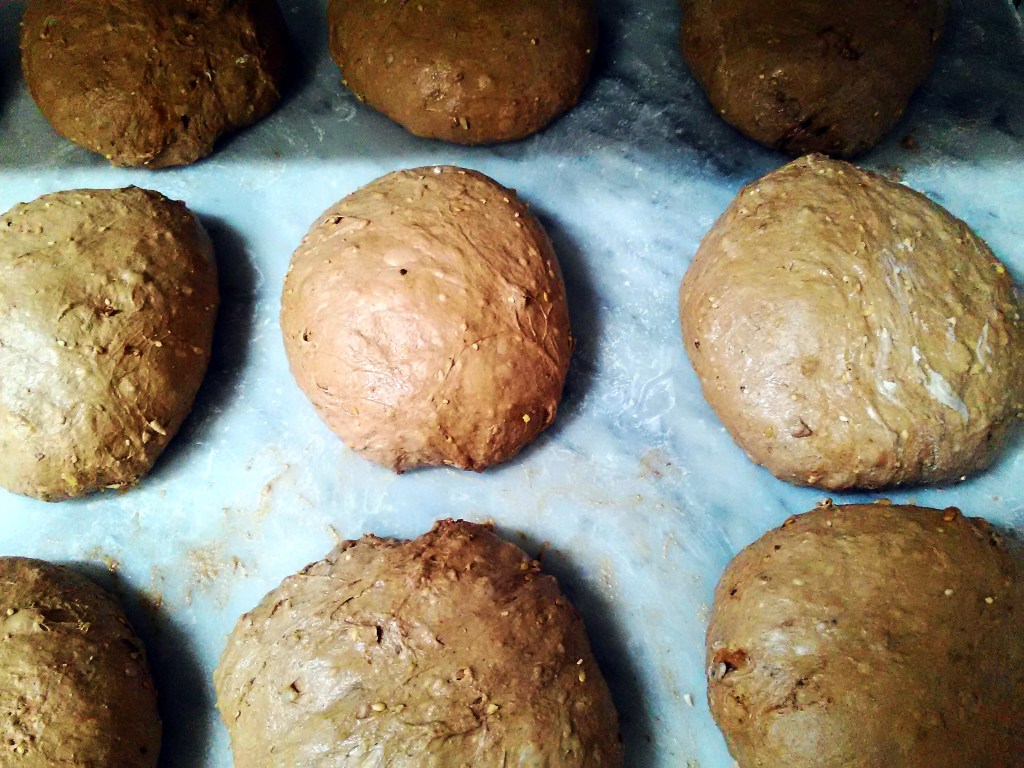
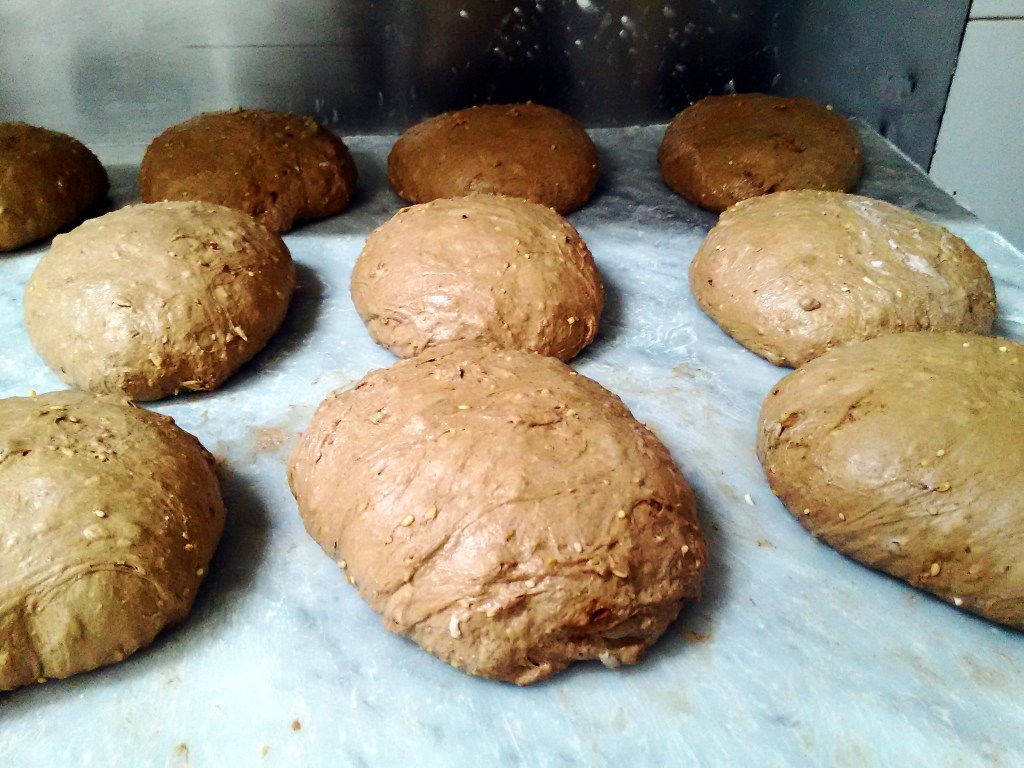
A sourdough dough is slow. After mixing it sits for hours while the starter’s wild yeasts and bacteria get to work, building gas, flavour and strength. Then it is divided and pre-shaped into rounds, and rested again before the final shape.
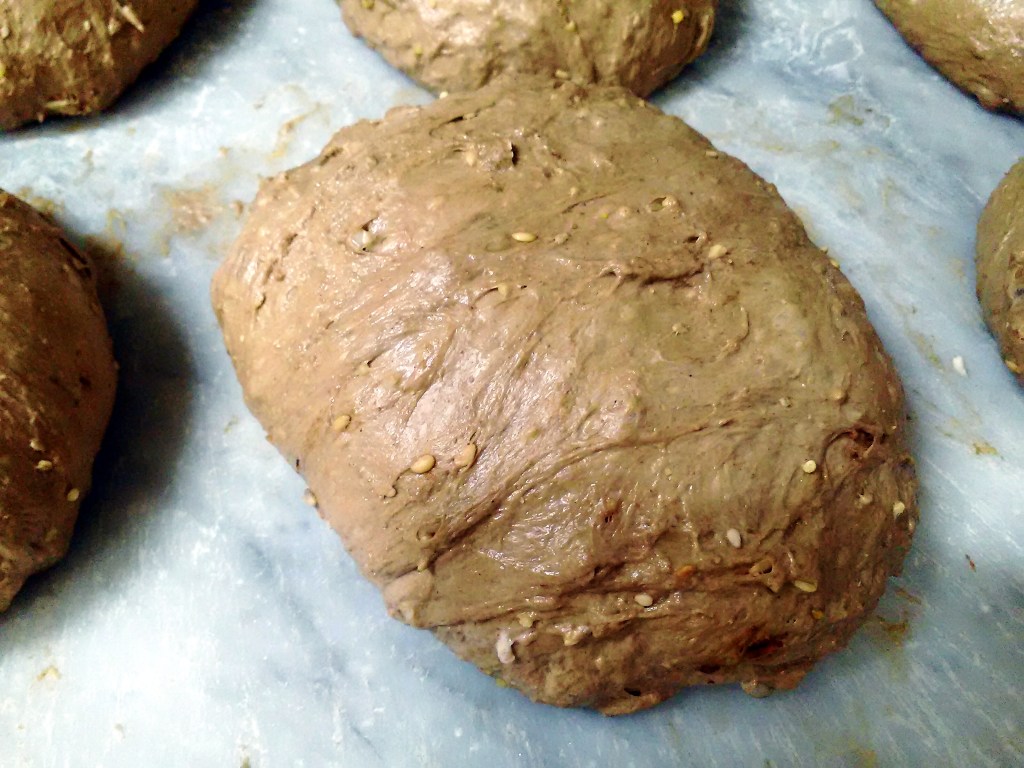
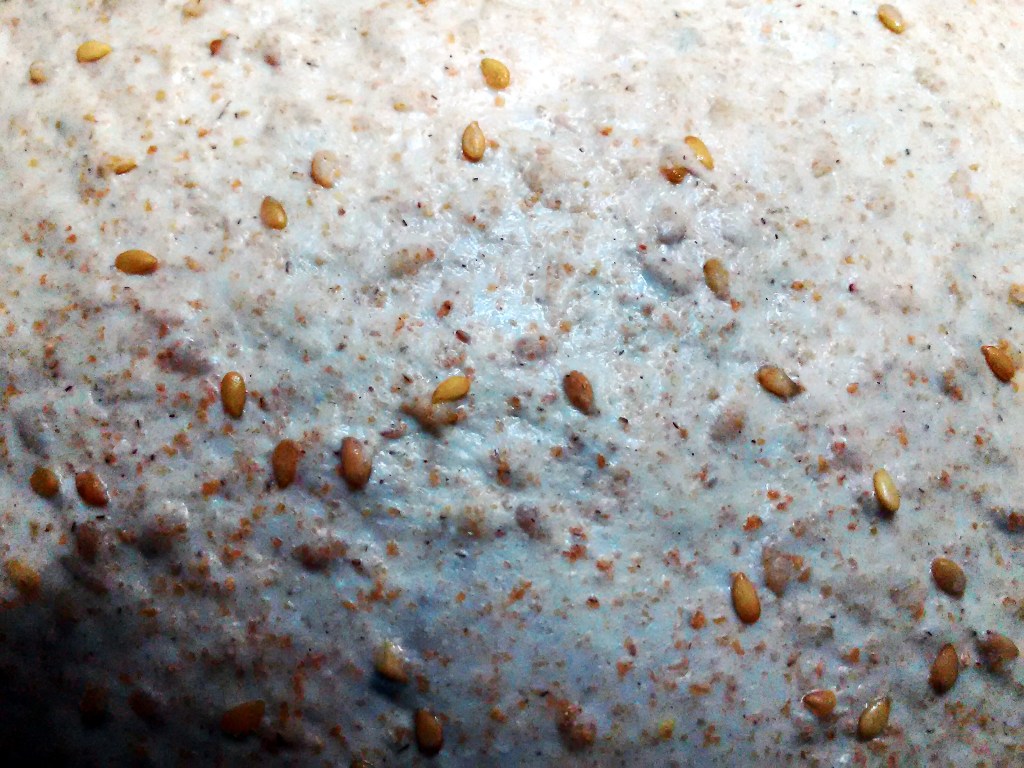
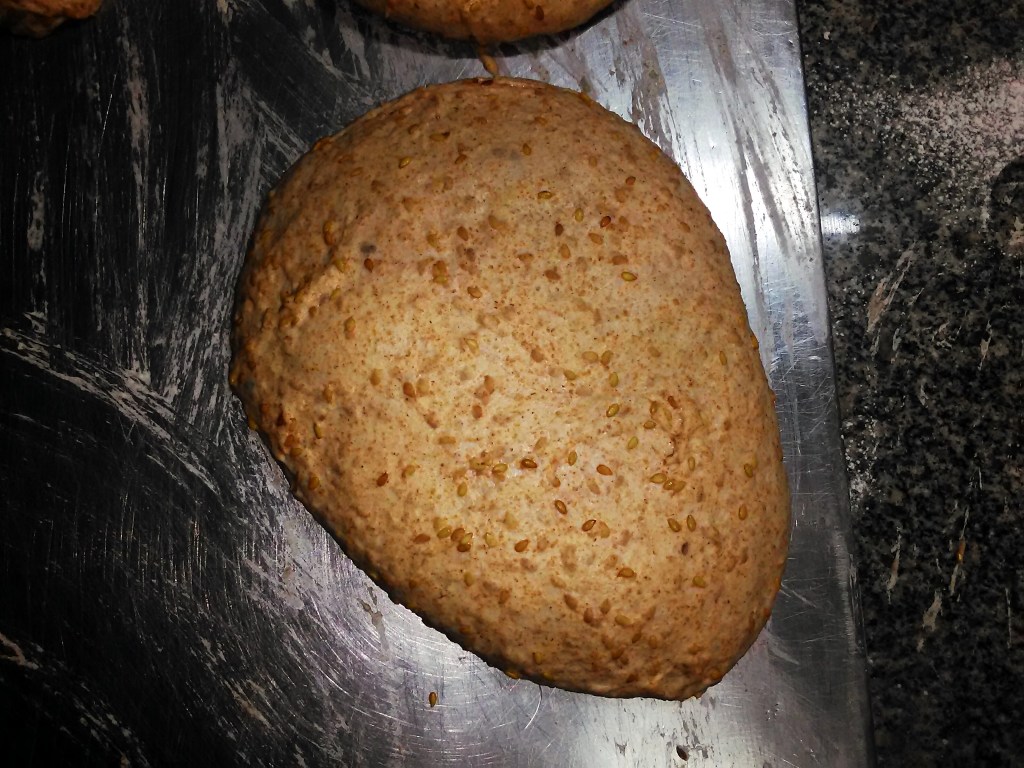
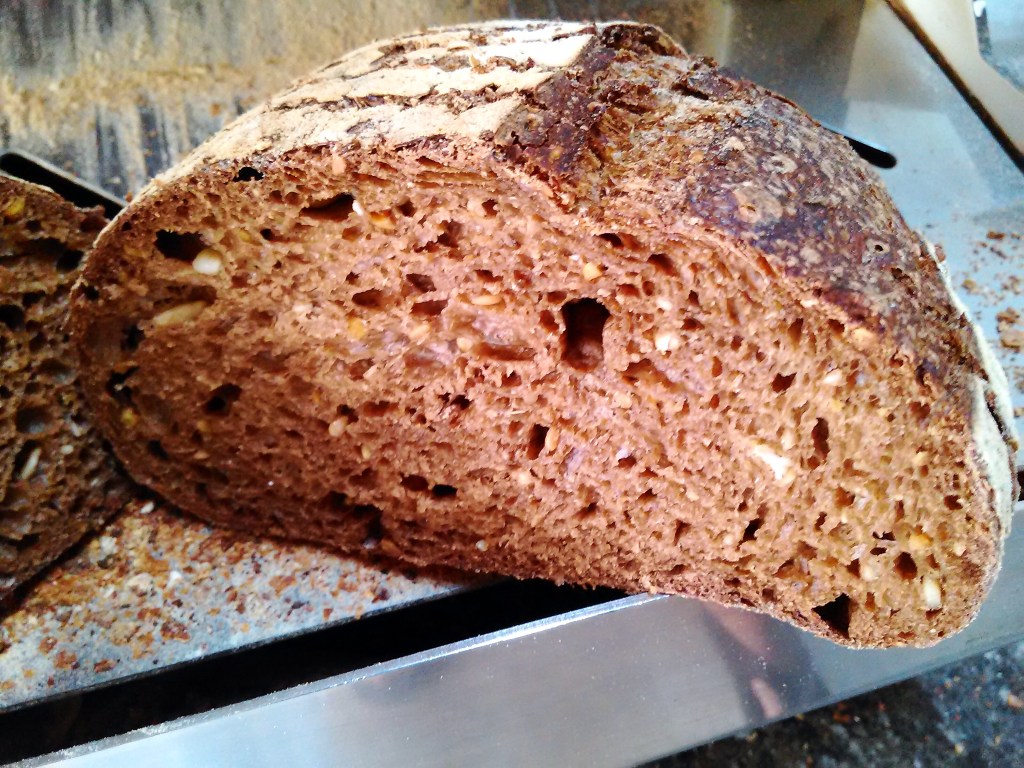
Our wholemeal and seeded doughs are heavier and darker. Bran and seeds go in with the flour, and the dough is handled gently so they don’t tear the gluten.
II · The proof
A night in the basket
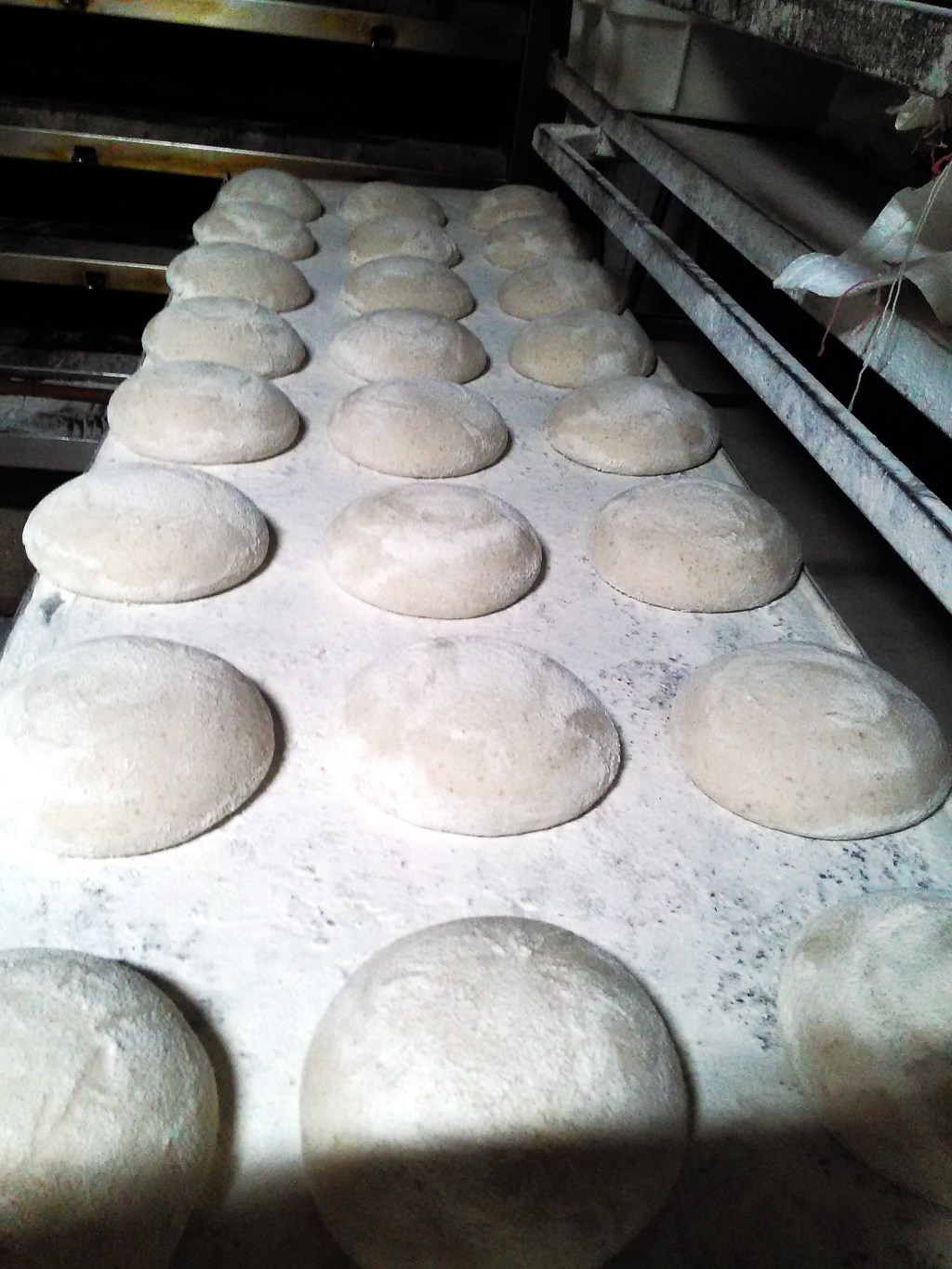
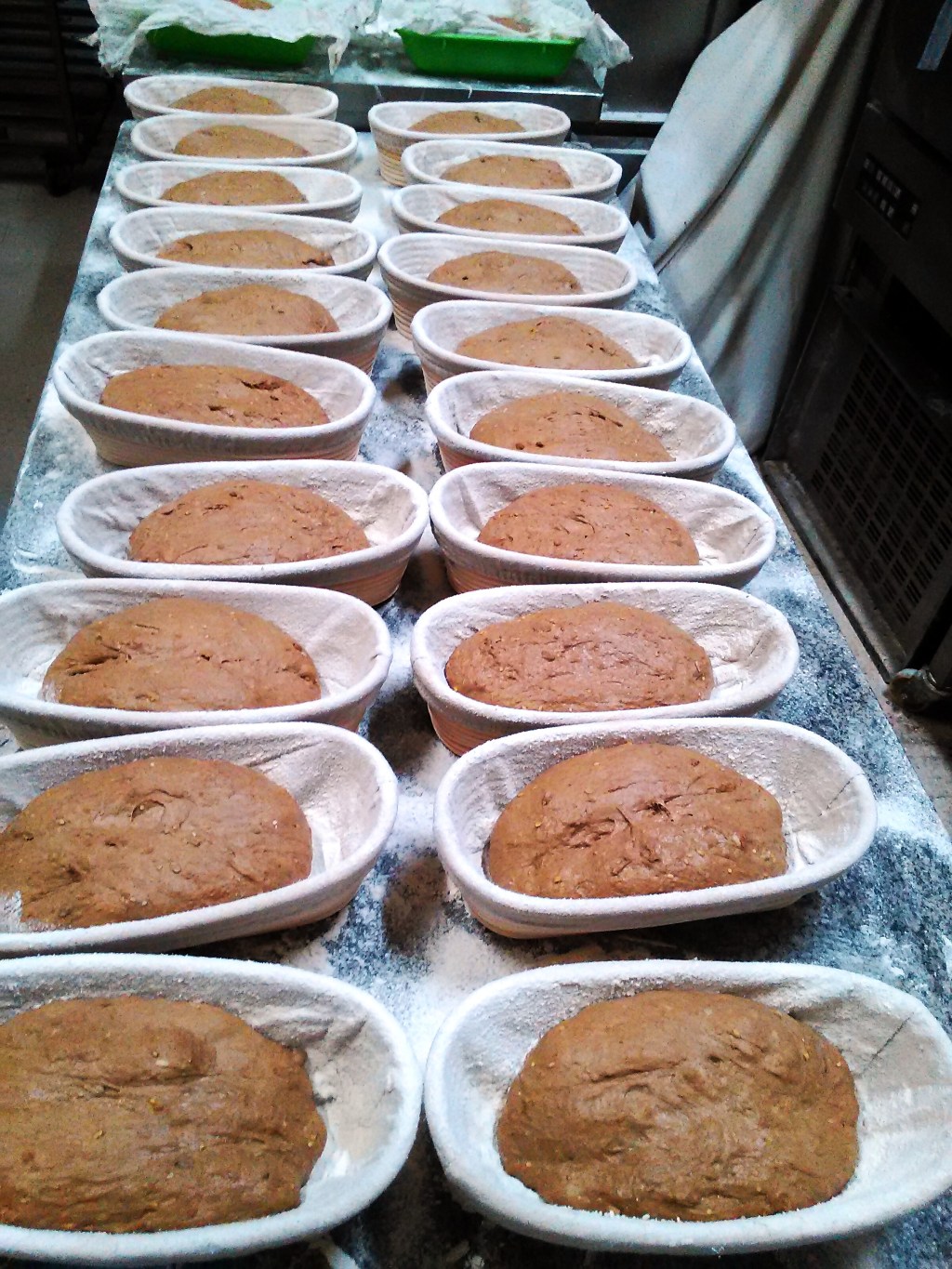
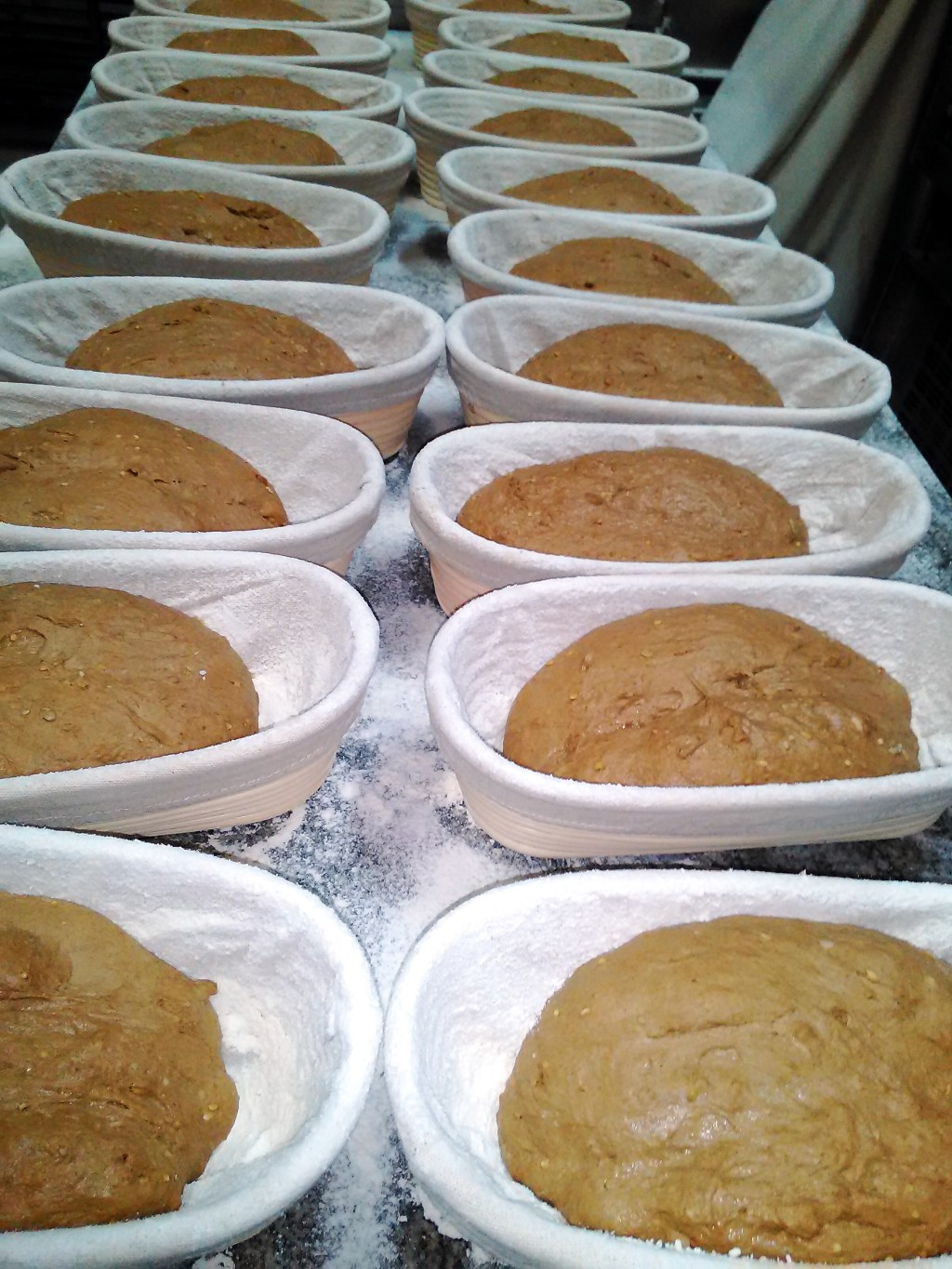
Shaped loaves go into lined cane baskets, called bannetons, and spend the night in the cool. The long, cold proof slows the yeast, lets the bacteria build that gentle sour tang, and makes the dough firm enough to score.
III · The bake
Scored, then into the heat
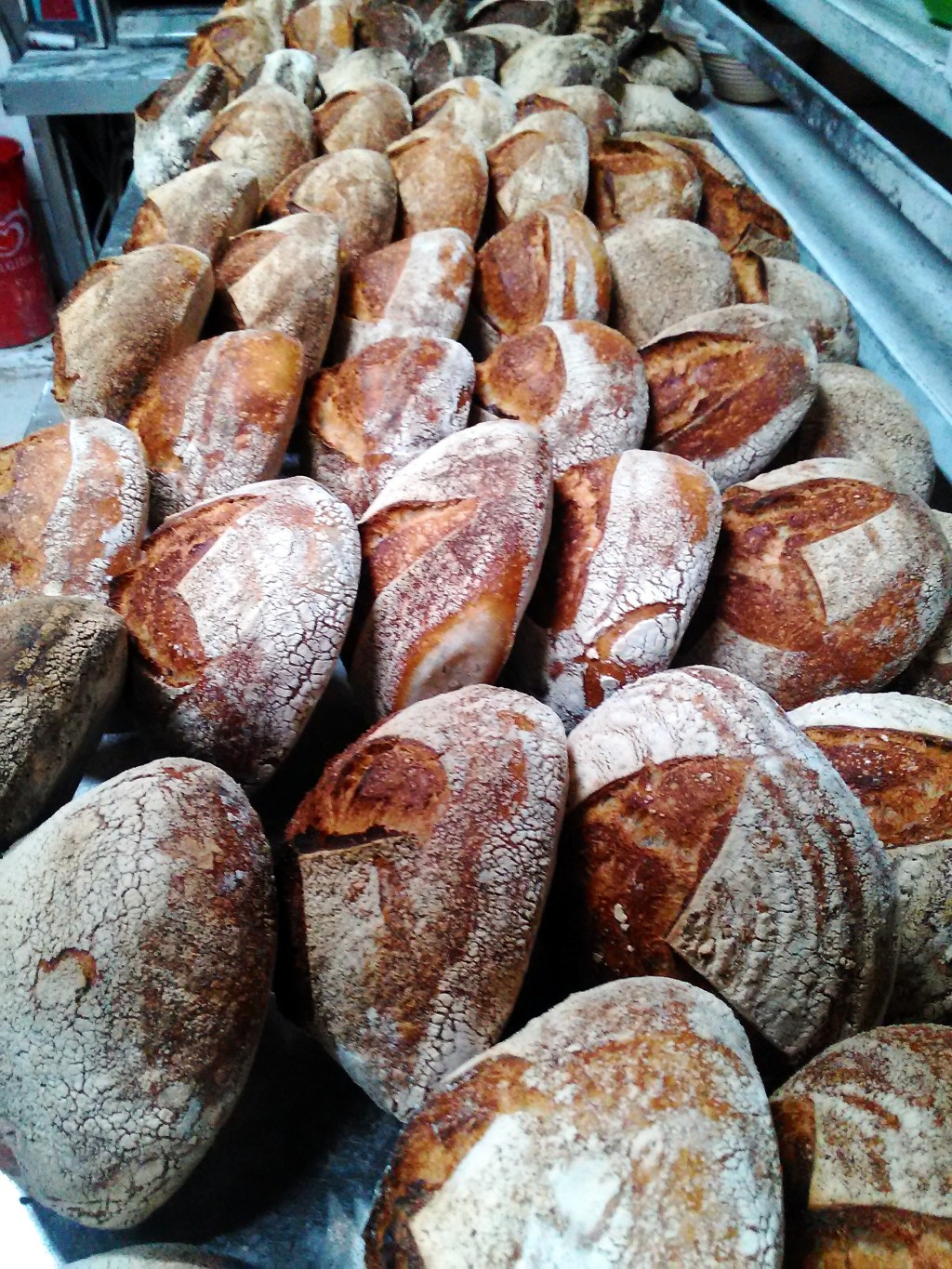
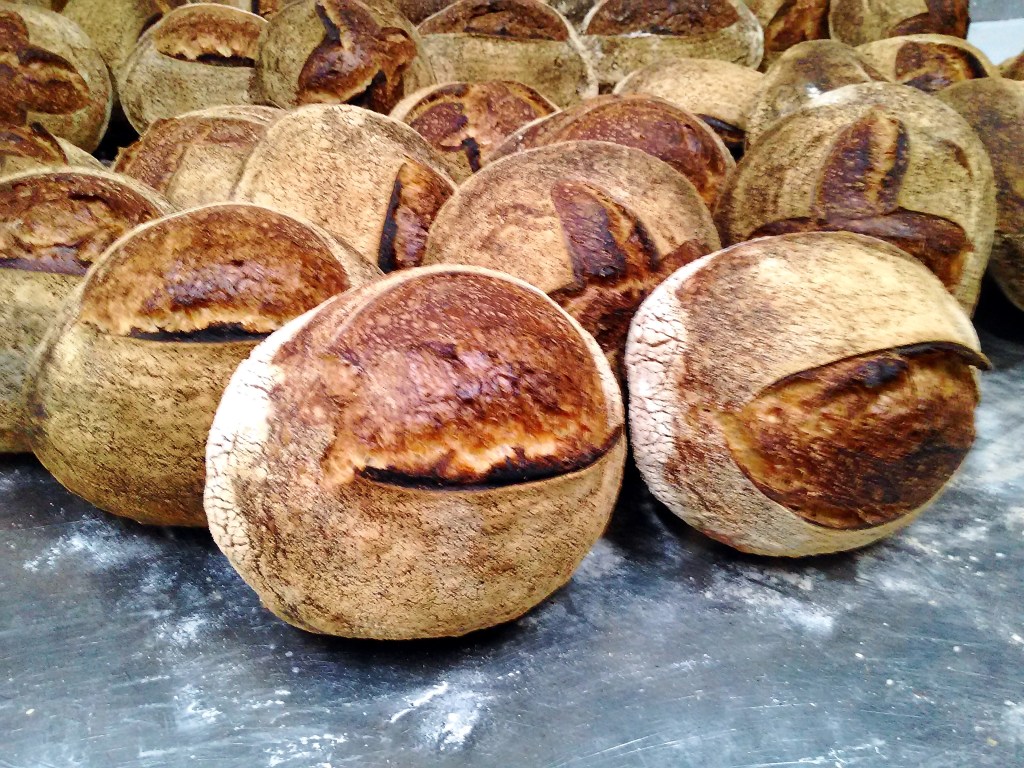
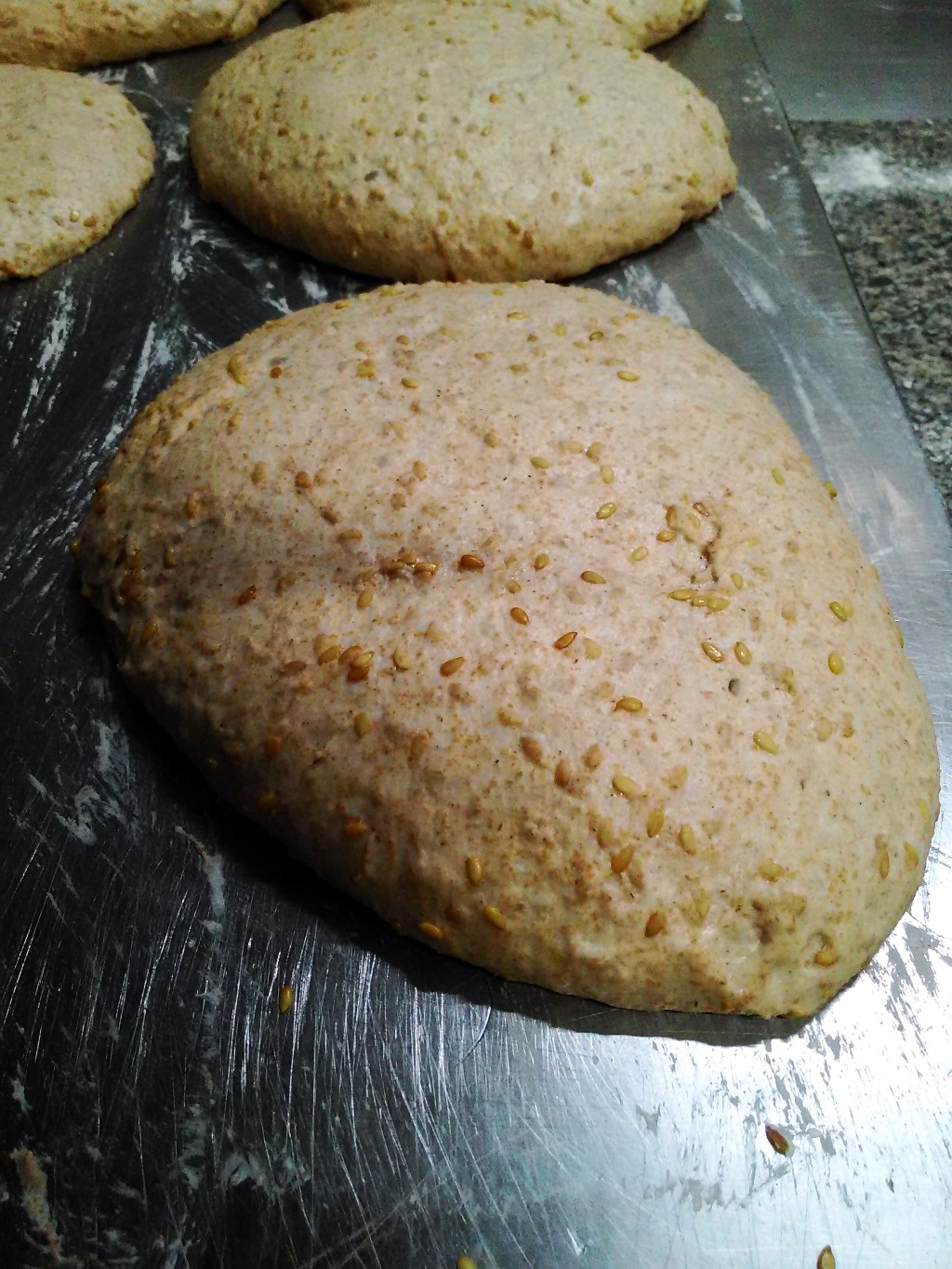
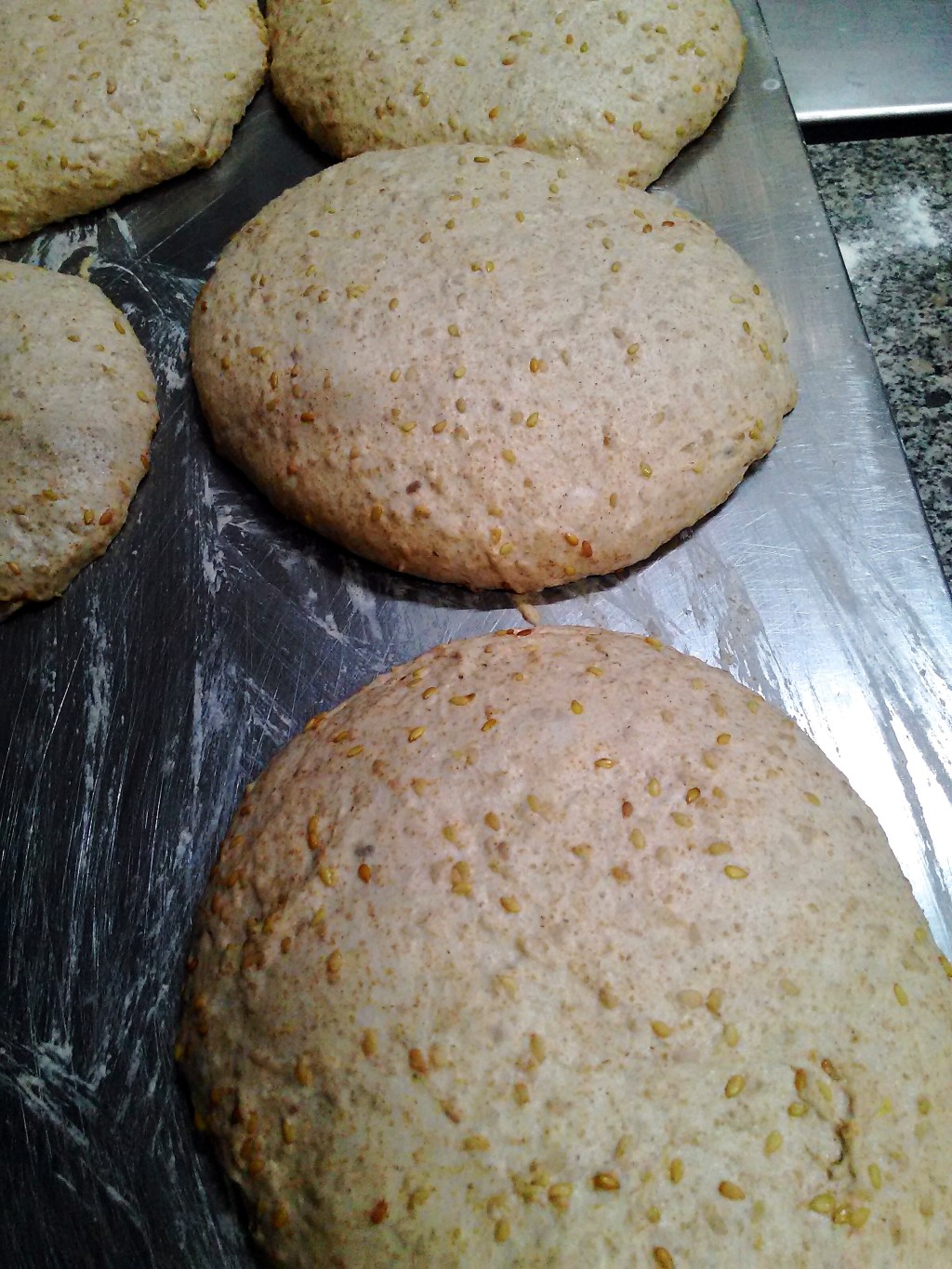
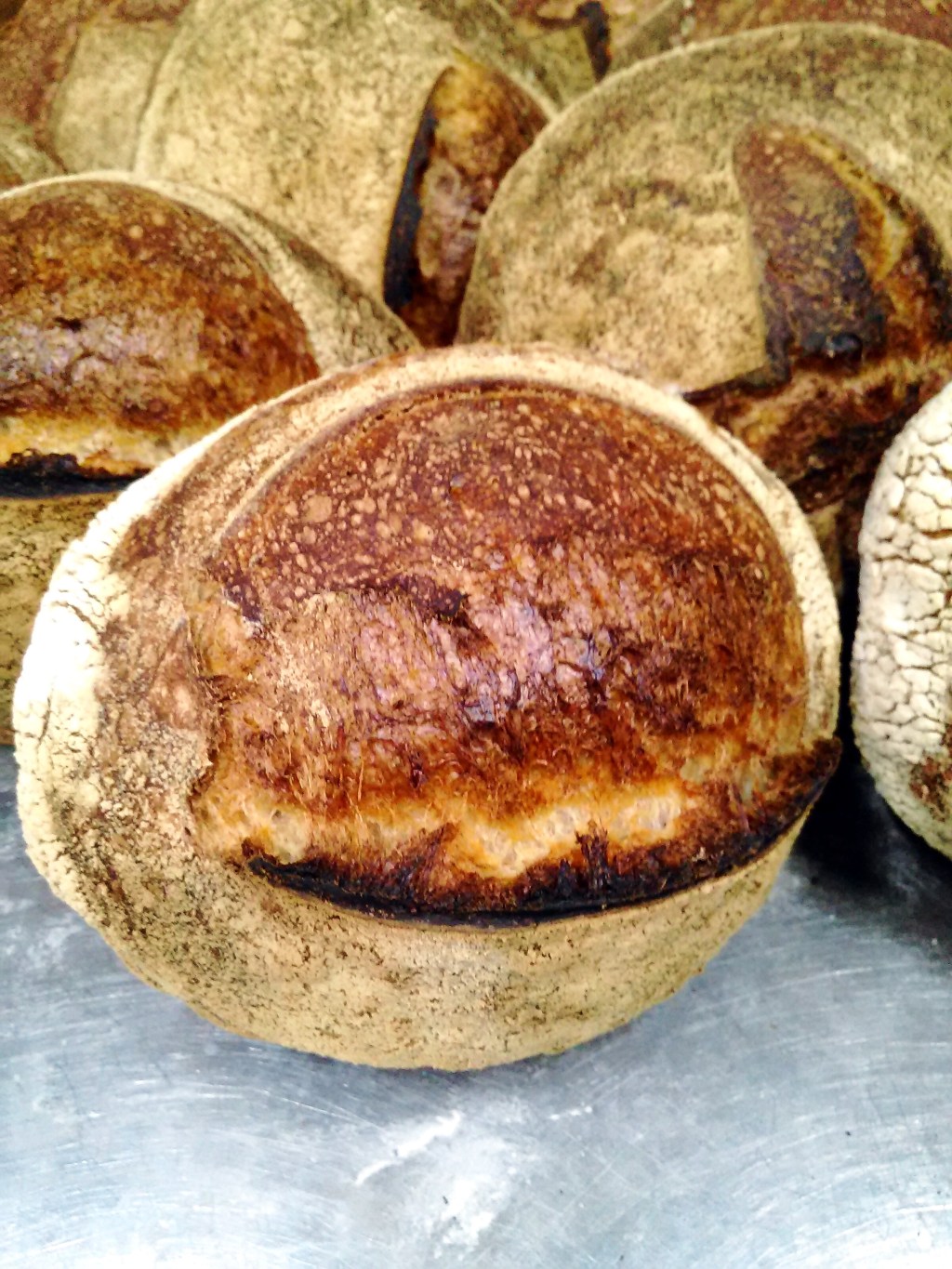
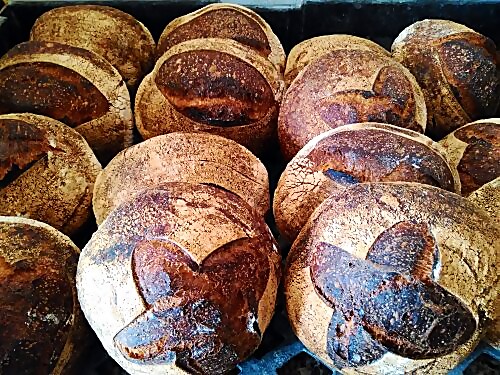
Just before baking, each loaf is turned out and cut with a blade. The score lets steam escape and gives the bread its ear, the ridge of crust that lifts and darkens in the oven.
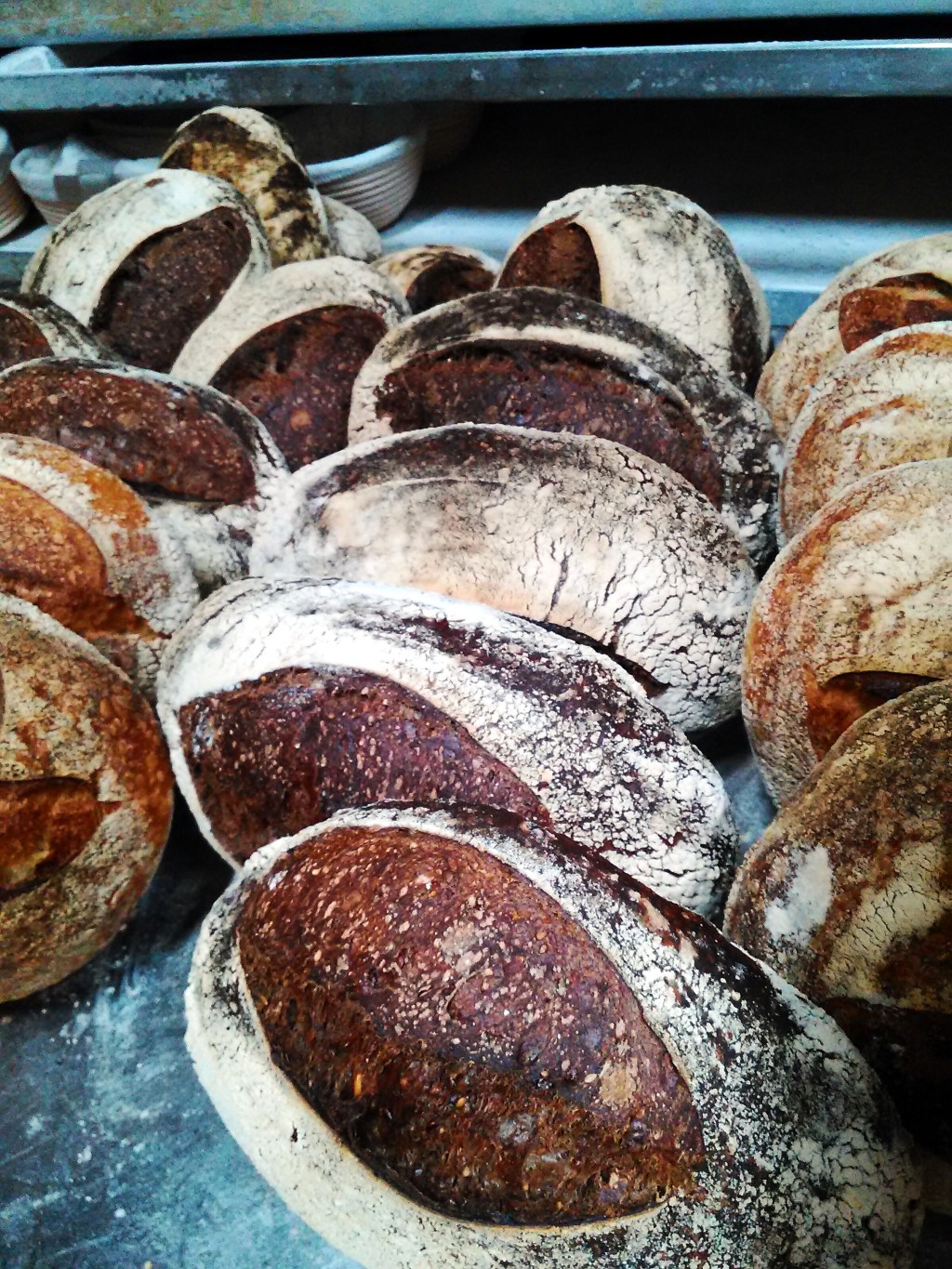
A hot oven and steam do the rest: the loaf springs up in the first minutes, then the crust caramelises to deep brown. Dark is flavour, so we bake it bold.
IV · The crumb
The proof is in the crumb
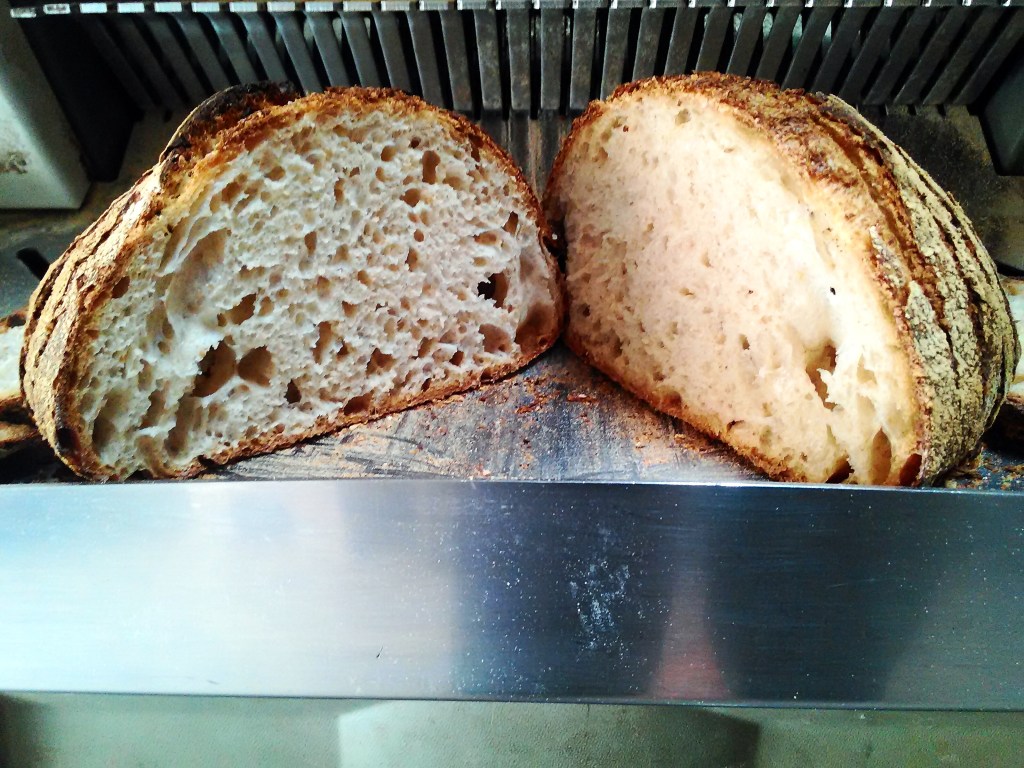
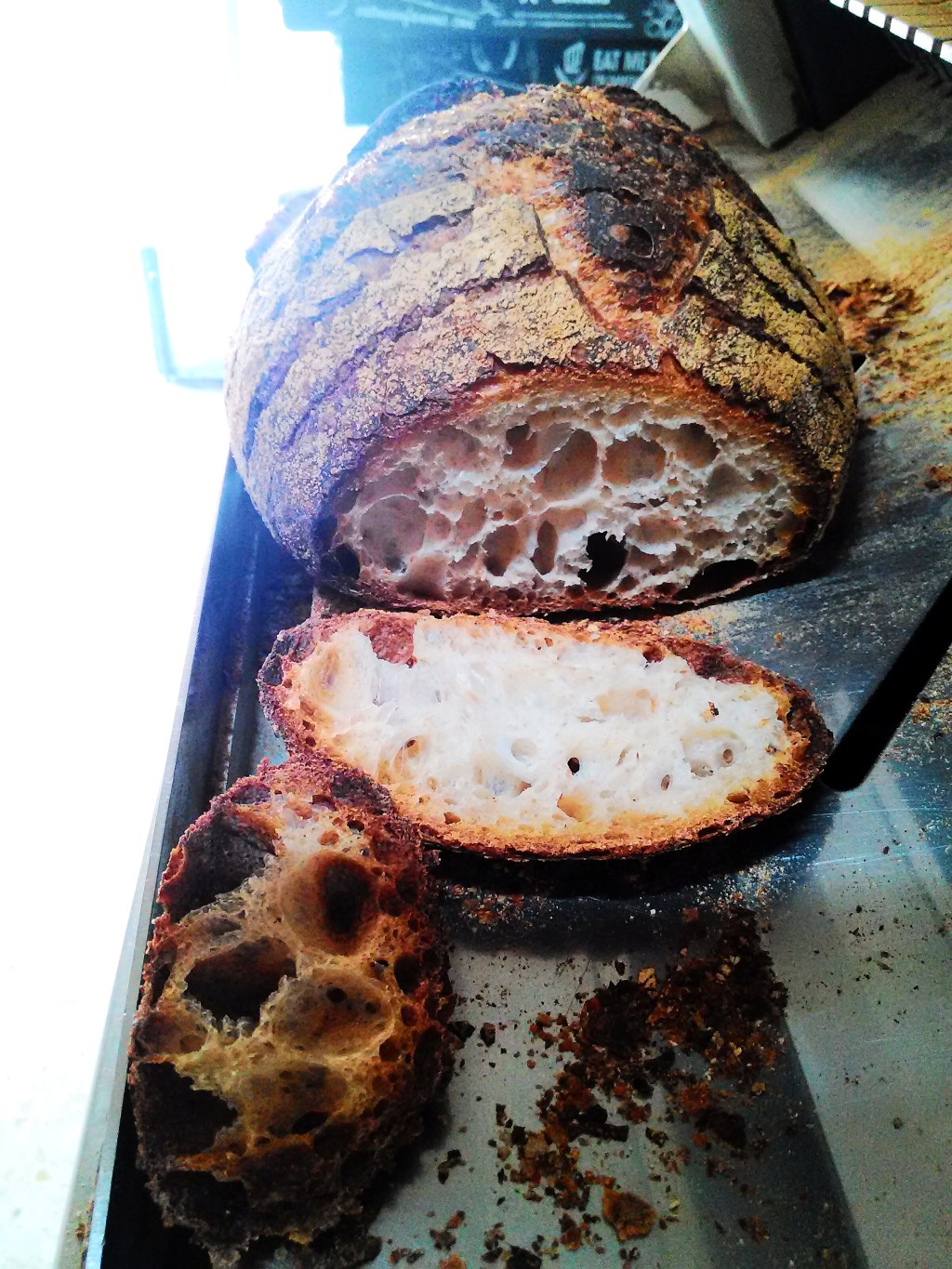
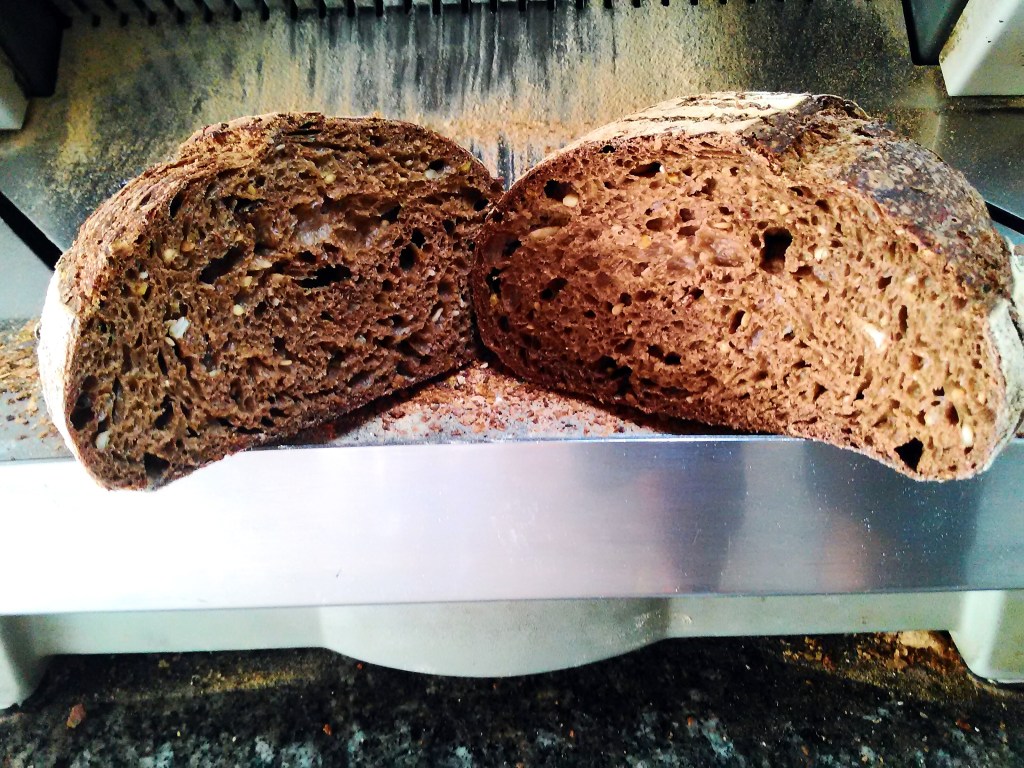
Cut a well-fermented loaf and it tells you how it was made. A white loaf opens up into glossy, irregular holes; a dark wholemeal loaf is closer and moister, and keeps for days. Let it cool for an hour before cutting, because the crumb is still setting.
Bake your own
Everything above starts with a jar of flour and water. Our guide takes you from day one to your first loaf.

